Property Management
Technology
Resident Experience


Volunteer boards keep thousands of associations running, yet most began serving without training in property operations or finance. Modern community software gives these boards structured tools to handle daily tasks without adding paid staff. Choosing an approachable platform can turn a stressful role into a manageable, rewarding contribution to your community.
Self-managed boards often juggle full-time jobs alongside vendor coordination, meetings, dues collection, and resident questions. The right technology reduces friction on all of those tasks and shortens learning curves for new members. Understanding what makes a platform truly volunteer-friendly helps your board pick software you will actually use.
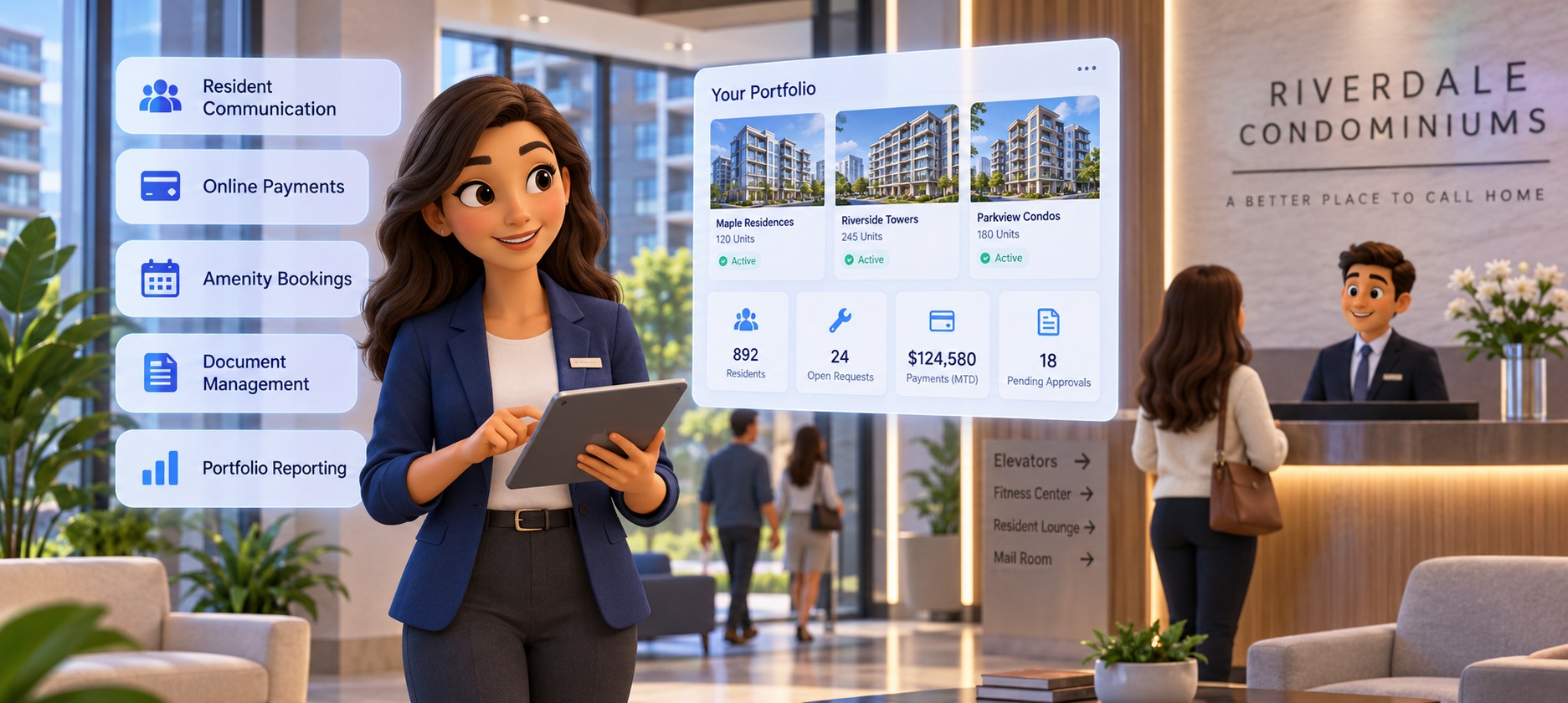
Self-managed community software is a cloud platform that helps volunteer boards manage HOA or condo operations without a management company. It centralizes communication, payments, documents, amenity bookings, and requests into one accessible system for all residents. Volunteer boards use it to reduce manual work and keep community operations organized between meetings.

Volunteer board members bring dedication rather than professional property management training to their communities every single day. According to iPropertyManagement, more than 2.5 million homeowners serve on HOA boards or committees, contributing over 101 million volunteer hours each year. Purpose-built community software helps these volunteers apply their time where it creates the most value.
Board members typically handle several recurring responsibilities that quickly overwhelm anyone working without proper tools:
Additionally, boards must document decisions clearly to protect themselves from liability and maintain trust with residents. Missing records or inconsistent communication can create disputes that consume time and damage community relationships.
Ultimately, software designed with volunteers in mind reduces cognitive load and shortens onboarding for every incoming board member. Learn how modern tools reduce burnout in our post on reducing board stress with reliable self-managed HOA software.
User-friendly platforms share several practical traits that separate them from generic tools that overwhelm new users. Intuitive navigation, clear labeling, and mobile access all matter more than depth of configuration options for volunteer teams. The best community software feels natural on the first login, not after weeks of training sessions.
Look for platforms that place common actions within one or two clicks from any dashboard view. Volunteers should not need documentation to send an announcement, log a request, or approve a payment. Consistent layouts across modules help board members build confidence quickly through repeated, predictable interactions.
Also, consider whether the platform includes built-in guidance, tooltips, or short in-app tutorials for new users. Boards experience regular turnover, so easy onboarding directly protects continuity when leadership changes hands each term.
Then evaluate mobile app quality, since volunteers rarely sit at desks during their community service commitments. In addition, review how the vendor handles support requests, since responsive help teams make a real difference during your first months. Compare vendor support styles by reading about our approach on the Why Concierge Plus page.
Clear communication anchors every functional board, and inconsistent messaging remains a top complaint among residents across associations. According to ExactEstate, between 30% and 40% of HOAs are self-managed and rely entirely on elected volunteers. Strong community software gives these boards direct channels to residents without depending on personal email accounts.
Look for platforms offering targeted announcements, push notifications, and audit trails of every message sent to residents. Board members should send updates from one screen without exporting contact lists or copying between tools. Meanwhile, residents should receive messages through channels they actually check, including mobile push and email.
Meeting management deserves equal attention, since documentation protects boards and preserves institutional memory across leadership transitions. Consequently, look for shared document libraries, version control, and permission-based access for sensitive board files.
Learn more about resident engagement strategies in our post on increasing participation using community engagement software solutions. Additionally, explore how AI tools reduce repetitive question volume through our overview of +Ai and Ryan.

Handling association funds carries real responsibility, and volunteer treasurers benefit from software that prevents common bookkeeping errors. Look for platforms with integrated payment processing, automated reconciliation, and clear reporting on outstanding balances and collections. In addition, confirm the platform supports multiple payment methods that residents prefer, including automated clearing house (ACH) transfers.
Ask each vendor how they encrypt sensitive data, back up records, and support role-based access for board members. Reliable providers document their security posture openly and welcome detailed questions during your evaluation process. Also, verify whether the platform integrates with your accounting software if your board uses external tools for reporting.
Learn how integrated payments and reconciliation reduce treasurer workload through our +Payments product overview. Meanwhile, keep in mind that strong audit trails give incoming board members clear visibility into every past transaction.
Consequently, financial tools built into your community software should feel simple enough for volunteers yet rigorous enough for compliance. Balancing accessibility with security is where the best self-managed platforms distinguish themselves from generic alternatives.
Choosing volunteer-friendly community software sets your board up for smoother meetings, faster onboarding, and stronger resident satisfaction across the community. Take time to evaluate ease of use, communication features, financial tools, and support quality before committing to a platform. The right partner respects your team's time and helps every volunteer contribute confidently from day one.
Concierge Plus works with self-managed communities and property management companies to simplify daily operations across HOAs and condos. Our team helps volunteer boards implement modules that match your community's size, budget, and long-term operational goals. Reach out through our contact page to explore how our platform can support your board's next chapter.