Property Management
Technology
Resident Experience
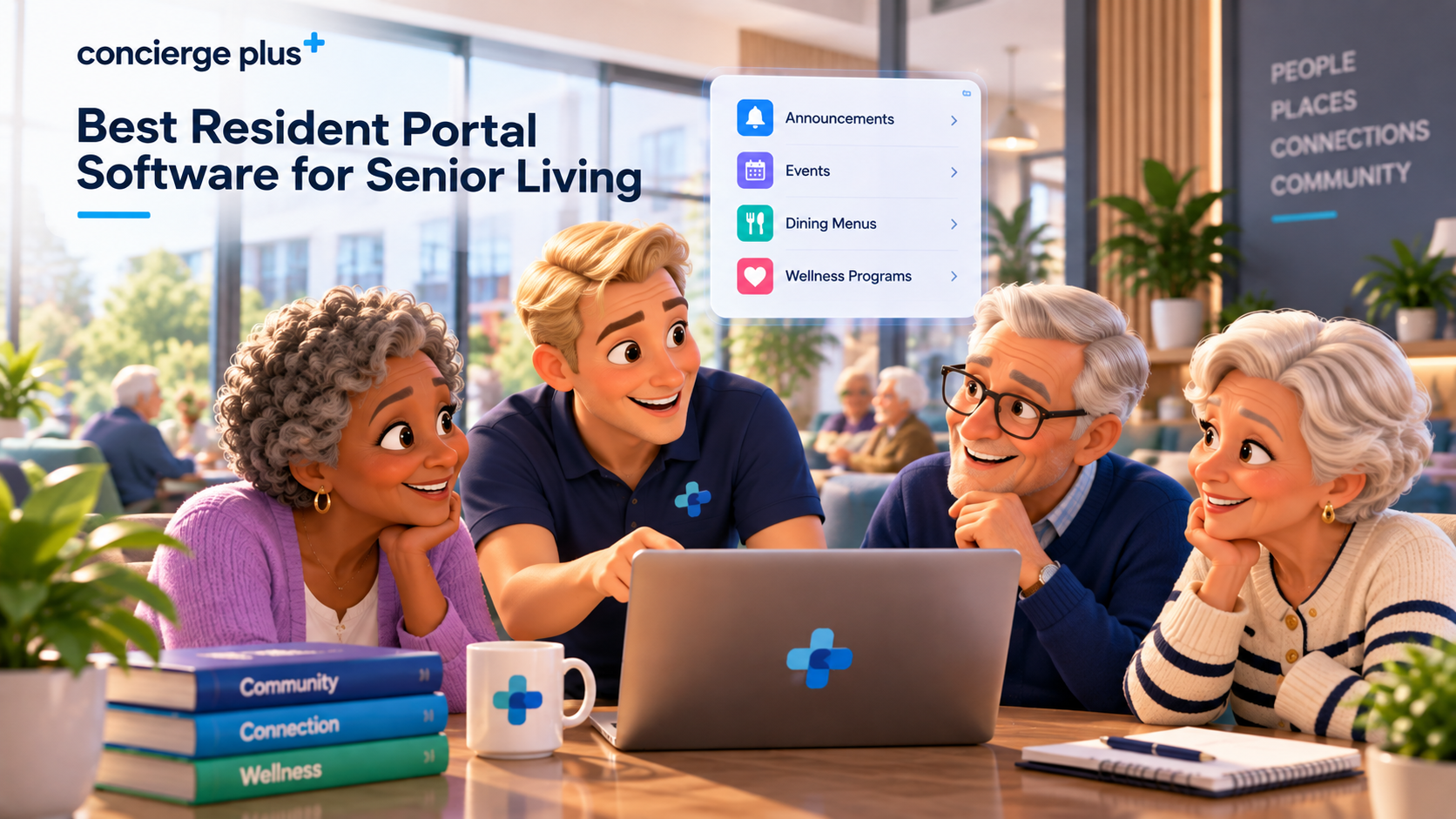
Best Resident Portal Software for Senior Living

Concierge Plus
Best Resident Portal Software for Senior Living
12:42
In a 55+ community, one resident might book the guest suite from their phone over breakfast. Another would rather stop by the front desk and read notices posted by the elevator. Some have a family member or caregiver helping with bookings and bills. Good resident portal software for senior living needs to work for each of them, without making your staff keep a separate system for people who don't use the app.
That's worth keeping in mind when you compare platforms. A long feature list won't tell you whether residents can make a booking without getting stuck, hear about a water shutoff without logging in, or set up recurring payments without a lot of help. This guide compares the main types of software senior communities consider and explains what to look for in ease of use, communication, payments, and safety.
What Is the Best Resident Portal Software for Senior Living?
For independent living, 55+ condominiums, and active adult communities, the best resident portal software works in any web browser and on a mobile app, reaches residents who don't use technology through automated phone calls, printed notices, and lobby displays, and lets staff book and log things on a resident's behalf. Look for AutoPay residents set up once, check payments handled in the same system, events with RSVPs and reminders, and entry instructions that let residents authorize caregivers. Assisted living and memory care communities also need care-management software, which is a separate category.
Start With the Kind of Senior Community You Run
"Senior living" covers very different operations, and the right software depends on which one you're running.
- 55+ condominiums and active adult HOAs. Owners govern through a board, pay common fees or dues, and share amenities. These run like any condo or HOA, with residents who may value phone and paper options more.
- Independent living rentals. Residents rent, often with a concierge or front desk, scheduled activities, and shared dining or amenity spaces. Operations look a lot like a staffed multifamily building.
- Assisted living, memory care, and skilled nursing. Clinical care is part of the service. These communities need care-management and health records software, which a resident portal does not replace.
Most resident portal software comparisons blur these together. If your community is in the first two groups, you're shopping for a resident portal. If it's in the third, you need care software first, and possibly a resident portal alongside it.
The 4 Types of Resident Portal Software Senior Communities Compare
1. Senior Living Engagement and Care Platforms
Best for: Operator-run communities with assisted living or continuing care, where activity programming and family updates are central.
These platforms are built around the senior living operator. They often focus on activity calendars, family communication, and links to care workflows. Watch for: How they handle owner-governed communities, HOA dues, amenity booking with fees, and front desk work like packages and visitor access, which may be limited or missing.
2. Community Resident Portal Platforms
Best for: Independent living, 55+ condos, and active adult communities that run like a condo, HOA, or staffed rental building.
These platforms cover the daily life of a community: announcements, amenity booking, service requests, packages, visitors, documents, events, and online payments, with a web portal and a mobile app. Watch for: They don't include clinical or care features, so confirm your community doesn't need them. Concierge Plus falls into this category.
3. Property Management Software Portals
Best for: Rental independent living communities whose main need is rent collection and lease records.
The portal that comes with property management software usually focuses on balances and payments. Watch for: Limited communication tools, little support for events or front desk operations, and fewer ways to reach residents who don't log in.
4. Paper, Phone, and the Bulletin Board
Best for: Very small communities with a dedicated staff member to run it.
It's familiar, and residents know how it works. Watch for: No record of who was told what, emergency reach that depends on a phone tree, and a workload that grows with every new resident.
Side-by-Side Comparison
Capabilities vary by vendor. Use this as a starting point and confirm the details in a demo.
| What you need | Senior engagement and care platforms | Community resident portals | Property management portals | Paper and phone |
|---|---|---|---|---|
| Reaches residents who don't log in | Varies | Emergency calls, printed notices, lobby displays | Rarely | Yes, manually |
| Events and activities | Built in | Built in, with RSVPs and reminders | Rarely | Sign-up sheets |
| Dues, rent, and fee payments | Varies | Built in, with AutoPay and checks | Built in | Checks by hand |
| Amenity and guest suite booking | Varies | Built in | Rarely | Paper calendar |
| Front desk, visitors, and caregivers | Varies | Built in | Usually not included | Logbook |
| Clinical and care features | Often included or integrated | Not included | Not included | Not included |
What to Look for: Ease of Use
The best feature is the one residents actually use. In senior communities, ease of use is also about what happens when a resident doesn't want to use the app at all.
- Browser and app options. A web portal that works on any computer or tablet, plus a mobile app for residents who prefer their phone. Nobody should have to install anything to get started.
- Simple account setup. A welcome email that lets residents set their own password, and staff who can resend it or reset a password in a few clicks when someone gets stuck.
- Staff can act on a resident's behalf. When a resident calls or stops by the desk to book the party room, staff should be able to book it for them in the same system everyone else uses.
- Answers without a phone call. A searchable online resident guide, and ideally an AI assistant that answers routine questions from your own community documents at any hour.
- Tested by real residents. Ask two or three residents to try the app during the demo. Their reaction is the best predictor of adoption.
What to Look for: Communication That Reaches Everyone
In a senior community, a missed notice can be a safety issue. Communication tools should reach every resident, whether they live in the app or have never opened it.
- Emergency broadcasting by email, text, and automated phone call, sent at once and regardless of individual preferences, including to residents without a login.
- Printable announcements for elevators, mail rooms, and bulletin boards, generated from the same notice residents see online.
- Lobby digital displays that show urgent notices where residents pass every day.
- Newsletters with an online archive, so residents and family members can find last month's update.
- Delivery reports showing who received each announcement, so staff know who might need a knock on the door.
- Events with RSVPs, guest counts, capacity limits, waitlists, and reminders, so activity staff stop managing sign-up sheets.
More on this in resident communication best practices for large high rises.
What to Look for: Payments
Payments should be the thing residents and their families think about least.
- AutoPay residents set up once. Residents should enroll themselves and pick the day. Look for a full-balance option that skips when nothing is owed and can be capped so it never overcharges, or a fixed monthly amount.
- Checks are still welcome. Some residents will always pay by check. Check payments should be processed and tracked in the same system as online payments, with lockbox support if you use one.
- Reminders that don't nag. Balance reminders should only reach residents who owe more than a threshold you set.
- Resident control and privacy. Only the resident should be able to change their AutoPay, and payment information should never be visible to neighbors or the board.
- Card security. Card numbers tokenized by PCI-DSS compliant payment providers and never stored by the software vendor.
What to Look for: Safety, Visitors, and Caregivers
Front desk tools carry extra weight in senior communities, where caregivers, housekeepers, and family visit often.
- Entry instructions. Residents record who may enter their unit, with types such as caregiver, housekeeper, or visiting guest, so staff always know who is authorized. Residents are notified when their guest arrives.
- Package alerts. Staff log deliveries and residents are notified automatically, which cuts down on trips to the mail room to check.
- Key and fob tracking. A permanent record of who signed out which key, and when.
- Shift handoffs. A pass-on log so the evening team knows what the day team saw, with a record of who read it.
- Incident reports. Documented with photos and attachments and kept securely.
See also enhancing building security with digital visitor tracking.
Questions to Ask Every Vendor
- How do residents without email or a smartphone receive emergency notices?
- Can staff book amenities and log requests on a resident's behalf?
- Can announcements be printed or shown on lobby screens?
- How do family members or caregivers fit in, and how are caregivers authorized for unit entry?
- What does a resident receive when their account is created, and how do staff help someone who gets locked out?
- Does the platform include any care or clinical features, and do we need them?
- Can residents keep paying by check?
How Concierge Plus Fits
Concierge Plus is resident portal software built for condos, HOAs, co-ops, and multifamily communities, which makes it a natural fit for 55+ condominiums, active adult communities, and independent living buildings that run the same way. It does not include clinical or care-management features.
- Ease of use. A web portal that works in any browser, a resident mobile app for iOS and Android, an online resident guide, and staff tools to book amenities on a resident's behalf. Ryan, the Concierge Plus AI resident assistant, is available as an add-on to answer routine questions from your own documents around the clock.
- Communication. Targeted announcements with delivery reports, printable notices, lobby digital display support, newsletters, community events with RSVPs and waitlists, and emergency broadcasts by email, text, and automated phone call that reach residents even without a login.
- Payments. Card, debit, and ACH/EFT payments, resident-managed AutoPay, check processing with lockbox support, threshold-based balance reminders, and card numbers that never touch Concierge Plus servers.
- Safety and front desk. Entry instructions with caregiver and guest types, package tracking, visitor parking, key management, a shift pass-on log, and incident reports.
Frequently Asked Questions
Do seniors actually use resident portal apps?
Many do, though adoption varies widely from one community to the next. The key is not to depend on the app alone. Choose software that reaches residents through phone calls, printed notices, and lobby displays too, so nobody is left out.
Can residents without email still be included?
Yes, with the right tools. Emergency broadcasts should include automated phone calls that reach residents without a login, staff should be able to book and log on a resident's behalf, and announcements should be printable for common areas.
Is resident portal software the same as senior living care software?
No. Care software manages clinical needs, care plans, and health records. Resident portal software manages communication, amenities, payments, and front desk operations. Assisted living and memory care communities typically need care software, and may use a resident portal alongside it.
How can family members and caregivers be involved?
Ask each vendor how they handle family access. At minimum, residents should be able to register caregivers through entry instructions so front desk staff know who is authorized to enter their unit.
See It With Your Residents in Mind
Bring your community's activity calendar, your amenity rules, and the questions residents ask your front desk most. In a Concierge Plus demo, a specialist walks through how communication, bookings, payments, and visitor access would work for your community, including for residents who never open the app.
Book a demo and see how it fits. Designed to make your life easier.