Property Management
Technology
Product News

Large high-rises run on information. A single tower can hold hundreds of units, and each resident expects timely answers. When resident communication breaks down, the front desk feels it first. Calls pile up. Emails go unanswered. Small questions turn into complaints. Getting communication right is one of the most practical ways to keep a large building running smoothly.
High rises work differently from small buildings. The volume of daily interaction changes everything. A 30-unit property might handle a handful of requests a week. A 400-unit tower can field dozens a day. Package deliveries, amenity bookings, maintenance issues, and visitor requests all compete for staff attention. Without a clear system, important messages get buried.
Residents also expect more; many are used to instant service from the apps they use every day. Residents shouldn't have to wait until Monday to book the party room or get a quick answer about guest parking.
Not every update should be sent the same way. If there's a burst pipe on the ninth floor, residents need a text or phone call right away. A monthly newsletter, on the other hand, can wait in their inbox. Matching the message to its urgency helps people get the information they need without overwhelming them with constant notifications.
A useful approach:
The Concierge Plus team covers this idea in its guide to effective condo and HOA communication. The core principle is simple. Send the right message through the right channel, and residents stay engaged with what matters most.
Fragmented tools cause most communication problems in large buildings. One system holds announcements. Another tracks maintenance. Visitor logs live on paper. When information sits in separate places, staff waste time hunting for it, and residents get inconsistent answers.
A single platform fixes this. When resident communication, service requests, and bookings live together, the whole team sees the same picture. A manager can check a request, review past messages, and respond without switching screens. This matters even more across large portfolios, where staff cover several buildings at once.
Much of the daily question load is repetitive. Pool hours. Move-in rules. How to reserve the elevator. Answering these one by one drains staff time. Self-service tools let residents find answers on their own.
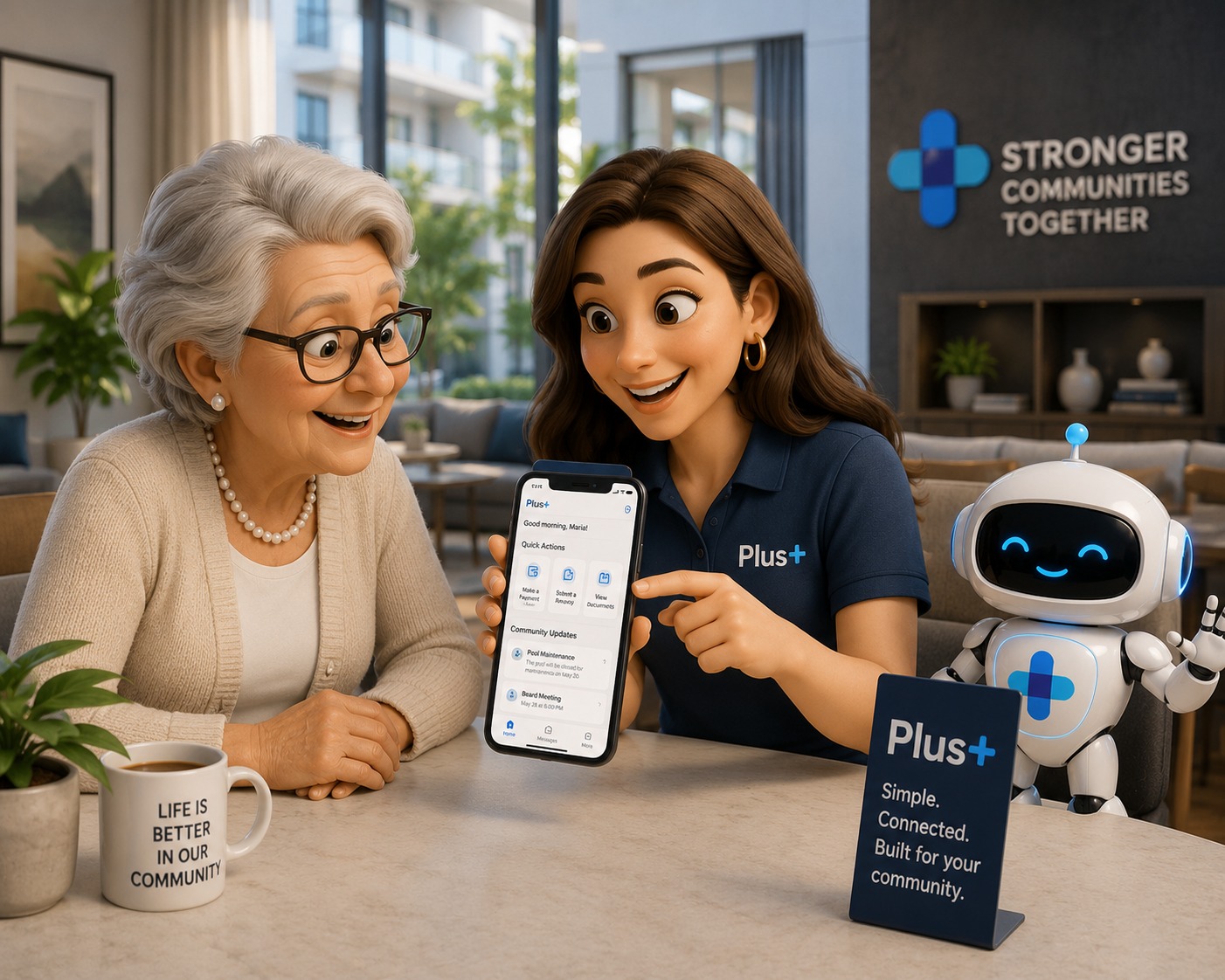
This is where AI helps. +AI, a product extension of the core Plus+ platform, includes a chatbot that answers common questions instantly. Managers upload community rules, policies, and FAQs. Residents ask, and the chatbot responds any time of day. Routine questions get handled automatically, so staff can focus on issues that need real judgment.
In a large community, memory is not enough. Boards and managers need proof of what went out and when. Delivery tracking shows which residents received a notice. This protects the management team and builds trust. It also helps during disputes, when a clear record settles questions fast.
Industry research backs the value of strong communication. According to a study by the Foundation for Community Association Research, 74 percent of residents say their community managers provide real value. Clear, consistent communication is a big part of that impression. The same survey found that 87 percent of residents stay on friendly terms with their boards, a result that good communication supports.
Tools only work when people use them well. Front desk teams should know which channel fits each situation. Templates help keep the tone steady across dozens of messages a week. A branded, consistent voice tells residents that the community is organized and professional. Over time, that consistency builds trust.
The scale of this challenge is real. The Foundation for Community Association Research estimates that 78.1 million Americans now live in community associations. Many of them live in mid and high rise buildings, where communication volume is highest. Managers who master resident communication at scale gain a clear edge.
Strong resident communication in a high-rise comes down to a few habits. Match the message to the channel, centralize your tools, and offer self-service for routine questions. Keep clear records, and train your team to use the system well. None of these steps is complicated on its own. Together, they turn a noisy, reactive process into a calm, reliable one.
If your building still juggles scattered tools, a purpose-built platform can help. Concierge Plus centralizes resident communication for large communities in one place. Reach out to see how it fits your building.