Property Management
Technology
Product News


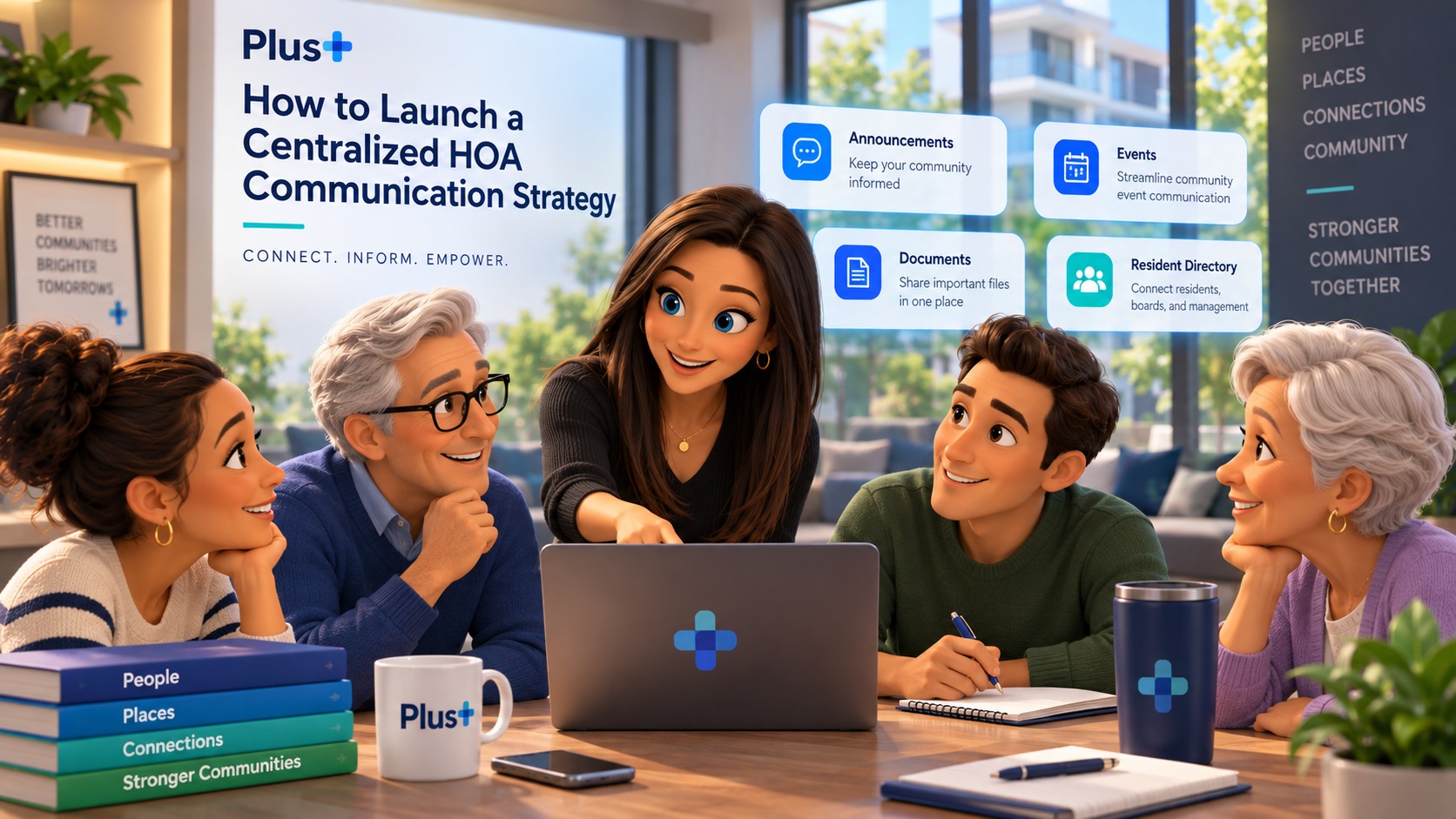
Condo and HOA boards face more pressure than ever to run their communities efficiently. Resident expectations are higher. Administrative tasks are more complex. And the old ways of managing operations — spreadsheets, email chains, paper forms — simply no longer cut it. That is why more boards are moving toward a modern HOA management platform to centralize operations, improve communication, and deliver a better experience for everyone involved.
Many boards still rely on disconnected tools. One system handles communications. Another manages amenity bookings. Documents are stored in a shared drive, or worse, in someone's inbox.

This fragmented approach creates real problems. Tasks fall through the cracks. Residents do not get timely updates. Board members spend hours tracking down information that should be instantly accessible.
The result is burnout for property managers and volunteer board members alike. And when communities grow, these problems scale up with them.
Modern residents are digitally connected. They pay bills, book services, and communicate entirely online. They expect their community experience to match that standard.
When a community cannot meet these expectations, resident satisfaction drops. Low satisfaction leads to disengagement. Disengagement makes governance harder for boards.
Modern HOA management platforms are built to address these gaps head-on. Boards are not switching for novelty. They are switching because the operational gains are tangible.
Here is what a well-built platform typically offers:
Each of these tools solves a specific, recurring pain point. Together, they transform how a community operates on a daily basis.
Property managers often champion new technology. But what is notable now is that boards themselves are initiating the switch. Boards need transparency. They want visibility into operations without being buried in daily logistics. A modern platform gives board members a clear overview of what is happening across the community, from pending service requests to upcoming events, without requiring them to micromanage.
Good governance also requires documentation. Having an audit trail for decisions, violations, and communications protects boards legally and builds resident trust. Platforms that log every action and store every document make compliance far easier to maintain.
Additionally, boards that serve growing or multi-building communities find that scalability matters. A platform that handles one property should handle ten just as efficiently. This kind of operational consistency is difficult to achieve without purpose-built software.
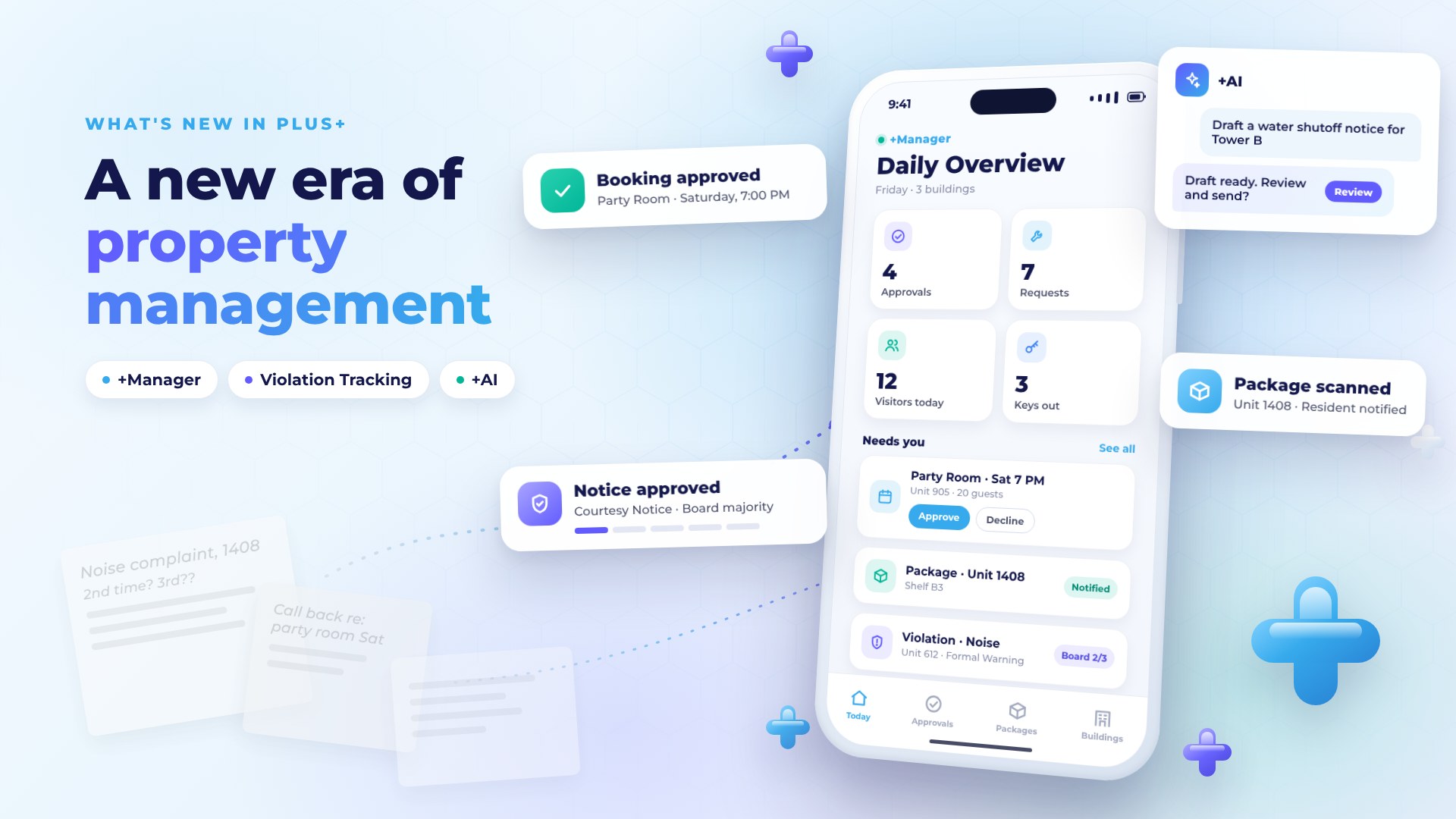
Concierge Plus offers Plus+, a cloud-based platform purpose-built for HOA and condo communities. It brings resident communication, amenity bookings, package management, visitor access, and board document storage into a single, intuitive system.
Recent additions like an AI-powered chatbot, dark mode, and customizable dashboards reflect a commitment to continuous improvement. The platform also includes a resident-specific mobile app, so everything is accessible from any device.
For property management companies managing multiple communities, Concierge Plus offers a scalable solution that reduces manual work without adding headcount. For self-managed associations, it provides the structure and tools to operate with the same level of professionalism as a fully staffed management company.
If your board is still relying on disconnected tools, you already know the friction it creates. Your community deserves better, and so does your team.
Explore what Concierge Plus can do for your HOA. Contact us to see why property managers and board members across North America are making the switch.
Is HOA management software difficult to implement?
Most modern platforms are designed with ease of use in mind. Many providers offer onboarding support, training resources, and dedicated customer service to help communities get up and running quickly without major disruption to daily operations.
Can self-managed HOAs benefit from a management platform, or is it only for large communities with professional managers?
Self-managed communities often benefit the most. A platform replaces the time-consuming manual work that volunteer board members would otherwise do themselves, freeing up time and reducing the risk of human error.
How does a management platform improve board governance specifically?
A platform creates a centralized record of decisions, communications, and community documents. This makes it easier to demonstrate accountability, enforce policies consistently, and onboard new board members without institutional knowledge being lost.
What should boards look for when evaluating an HOA management platform?
Key criteria include ease of use for both staff and residents, the breadth of features offered in a single system, quality of customer support, data security practices, and the vendor's track record of continuous product development.