
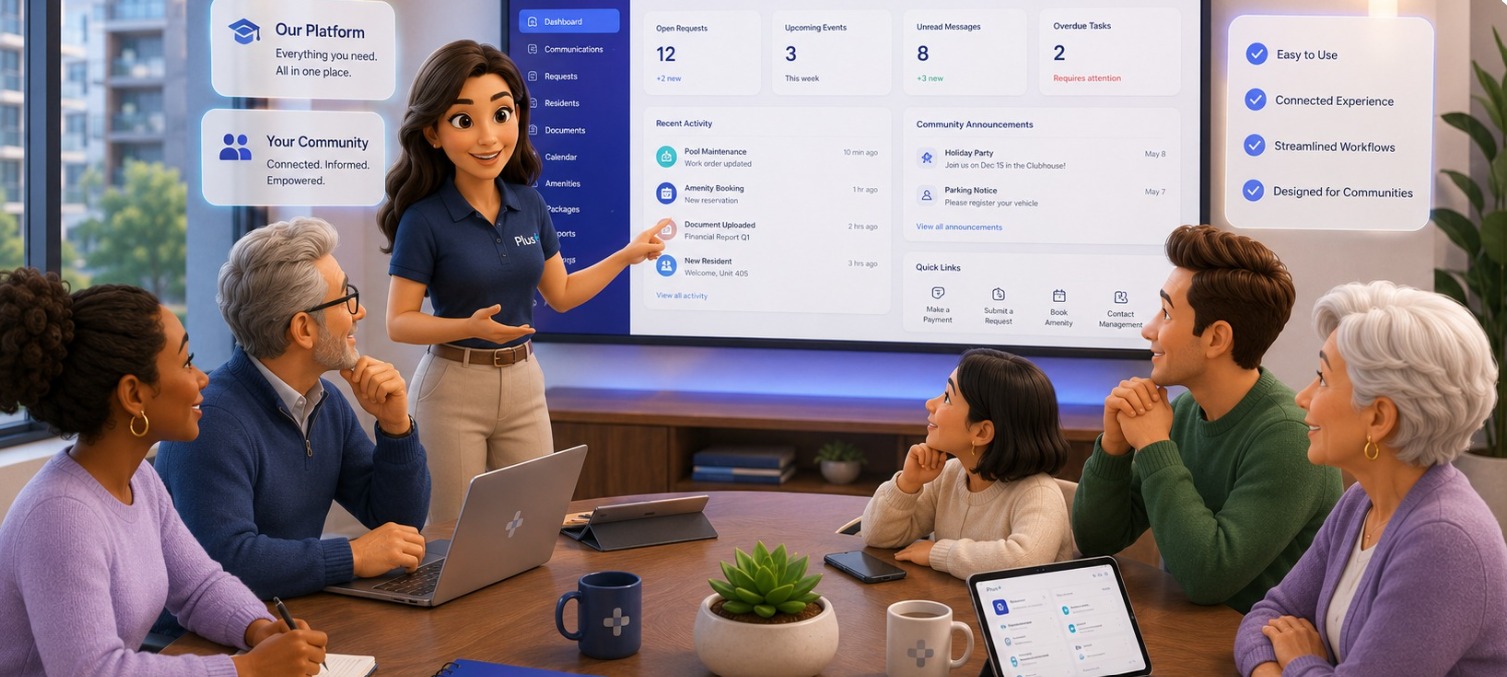

Property management automation has moved from optional experiment to a core competency for portfolios of every size. Property management automation reclaims hours each week and reduces the friction residents feel every single day. Understanding where to start and how to sequence rollouts helps your organization capture real gains without disrupting current operations.
Every management firm has repetitive tasks that consume time your staff could spend on higher-value work. Announcements, payment reconciliation, service requests, and document distribution all follow predictable patterns worth automating. A structured approach turns scattered manual work into scalable, measurable workflows that grow with your portfolio.
How Do You Implement Property Management Automation for Repetitive Tasks?
Implementing property management automation starts with auditing current workflows and identifying tasks that follow predictable, rule-based patterns. Choose a platform with the modules your team needs, then roll out automation in phases with clear success metrics. Ongoing measurement and adjustment help your organization capture real, compounding gains over time.
Identifying Repetitive Tasks Worth Automating
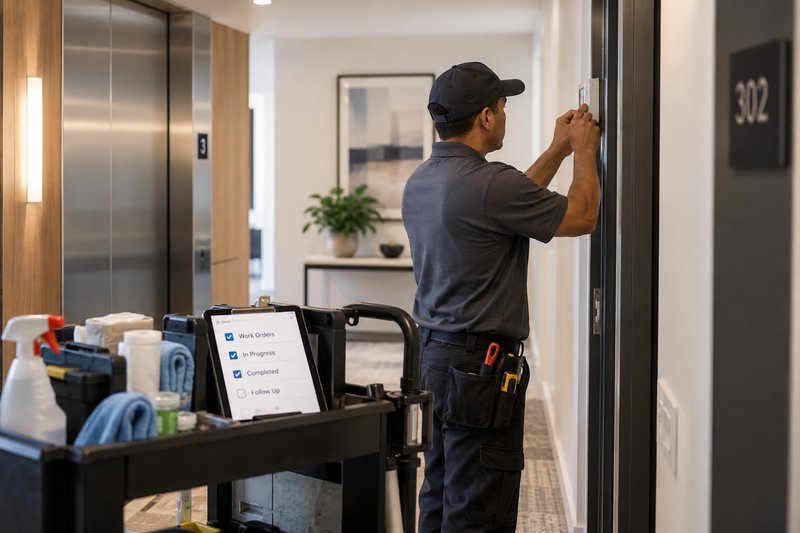
Not every task benefits from automation, so the first step is a clear audit of how your team currently spends time. Property management automation delivers the strongest returns when applied to high-frequency, rule-based work that follows predictable patterns. According to Second Nature, automation helps property managers reduce direct involvement in routine workflows through online portals and automated messaging.
Common candidates worth automating across most portfolios include:
- Payment reminders, late notices, and reconciliation across resident accounts
- Service request routing based on category, priority, and available vendors
- Announcements segmented by building, floor, or resident interest groups
- Amenity booking confirmations, waitlist management, and cancellation handling
- Package notifications, pickup reminders, and delivery logging
Additionally, look for workflows involving multiple handoffs between staff members, since automation reduces bottlenecks and delays. Consequently, your team spends less time coordinating and more time resolving the exceptions that require human judgment.
Explore how modular platforms support these workflows through our Plus+ Property Management Software overview.
Choosing the Right Platform for Property Management Automation
Platform selection shapes how deep your property management automation can go across each operational category. Look for cloud-based systems that combine core modules, integration options, and open interfaces for connecting existing tools. Meanwhile, verify that the vendor supports ongoing training as new automation features release across the roadmap.
Key Platform Capabilities to Evaluate
Look for platforms with the following capabilities before committing to a long-term investment across your portfolio:
- Configurable workflow rules that non-technical staff can adjust without vendor involvement
- Integration with your accounting system and existing property management tools
- Native mobile applications giving residents self-service access to common tasks
- Reporting dashboards that measure automation impact against your baseline metrics
- Role-based permissions supporting boards, managers, and residents with tailored views
Also, consider whether the platform includes AI-powered features that handle routine resident questions automatically. In addition, examine the vendor's onboarding model, since implementation quality often determines whether adoption sticks over time.
Learn how experienced vendors approach implementation through our Why Concierge Plus overview.
Rolling Out Property Management Automation in Phases

Big-bang deployments rarely succeed for property management automation, since staff and residents need time to adjust. According to BC Solutions, 53% of survey respondents cited resource and capacity constraints as their top obstacle in 2026. Phased rollouts respect those constraints while building momentum through visible early wins.
Sequencing Your Rollout for Success
Start with one workflow that touches many residents daily, such as announcements or payment reminders. Measure adoption, capture staff feedback, and refine the workflow before moving to the next category. In addition, communicate every change clearly to residents and boards before switching over from manual processes.
Then move to workflows with higher operational impact but slightly longer learning curves, such as service request automation. Meanwhile, keep documentation current so new hires can learn your automated workflows during onboarding.
Consequently, phased rollouts protect service quality while giving your team confidence to expand automation across additional workflows. Learn more about strategic implementation in our post on a practical guide to successful HOA software implementation.
Measuring the Impact of Property Management Automation
Automation without measurement rarely delivers the ROI leadership teams expect from platform investments. Property management automation should include clear reporting on labor hours saved, response times improved, and resident satisfaction changes. Consequently, your team can adjust workflows based on real data rather than assumptions or anecdotes.
Metrics Worth Tracking Monthly
Look for platforms offering dashboards covering the categories that matter most to your operations team. Track average response time to service requests, on-time payment rates, and resident engagement across communication channels. Also, monitor staff time savings by comparing pre-launch baselines against monthly reports from your new platform.
Then review reports with your operations team monthly to catch workflow issues before they become larger problems. In addition, share meaningful gains with boards and owners, since transparency strengthens confidence in your firm's operational approach.
Learn how integrated tools support measurement through our +Ai product overview.
Avoiding Common Property Management Automation Pitfalls
Automation projects sometimes stall or fail when leadership underestimates change management, data quality, or ongoing training needs. Property management automation depends on clean data, engaged staff, and workflows redesigned rather than simply digitized in place. Understanding common pitfalls helps your team plan realistic timelines and protect long-term outcomes.
Common Mistakes and How to Avoid Them
Look closely at data quality before launch, since bad inputs produce unreliable outputs across every automated workflow. In addition, invest in staff training so team members understand how to configure and adjust rules confidently.
Also, avoid over-automating early, since removing human review from complex decisions can create resident-facing problems quickly. Meanwhile, keep escalation paths clear so exceptions reach a real staff member promptly.
Consequently, thoughtful rollout planning protects your firm from the frustration that derails many automation efforts. Learn more about resident-facing considerations in our post on property management communication tools for modern portfolios.
Ready to Bring Property Management Automation Into Your Firm?
Property management automation gives your team lasting leverage when planned, sequenced, and measured with care from day one. Focus on high-frequency workflows, choose a flexible platform, and roll out changes in phases with clear success metrics. The right partner helps your organization capture gains without disrupting the service residents already expect.
Concierge Plus works with property management firms and self-managed communities to design automation strategies that fit real portfolios. Our team supports every phase from workflow audit through ongoing optimization across your community operations. Connect with our team through our contact page to map an automation plan tailored to your portfolio's next chapter.